
A visit from us means a measured tree, a look at what's under and around it, and a quote on paper that says prune, remove or leave it. The call costs nothing.
Does a storm-damaged tree need to come down, or just a limb?
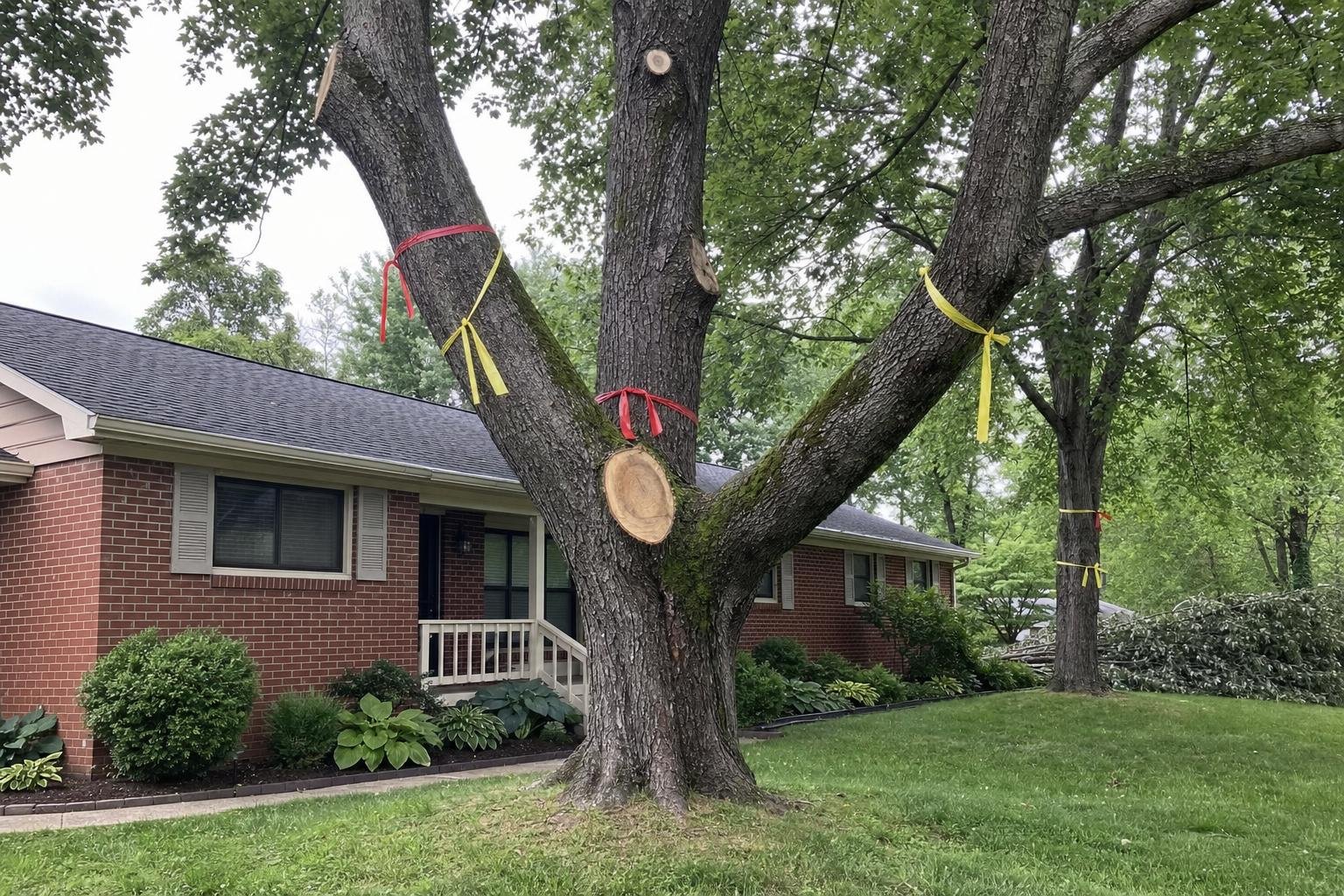
If the damage is confined to one branch, prune it and keep the tree. The May storm brought down trees and power lines across Washington County, including near Johnson City, and plenty of trees that stayed up lost a limb or two.
On a large branch, the first cut goes on the underside of the limb, so the bark doesn't tear down the trunk when the weight comes off. Most of the limb then comes off further out along the branch. The finishing cut leaves the branch collar intact instead of shaving flush to the trunk, because the collar is how the tree closes the wound. If the damage is in the trunk or the main structure, pruning won't fix it and removal is the honest answer.
These questions come up on tree trimming jobs. Shopping for tree service in Johnson City? Our home page has more.
Do I need a permit to take out a tree in the treelawn?
Yes. In Johnson City, a tree in the treelawn can't be removed until you apply for and get a permit from the city forester. Cutting first and asking later isn't an option.
The permit step is a line in our quote, with its place in the schedule, before any work is booked. Jobs in the treelawn wait on that approval, so if you're thinking of one, start the application early.
What will removal cost me?
Give us the rough height on the phone and you'll get a typical range on the call; the exact figure is set after we've looked at the tree. A small tree under 30 feet generally runs $725 to $1,350. A medium tree, 30 to 60 feet, runs $725 to $1,350.
Price climbs when the tree stands close to the house or wires, when a lot of the tree is damaged or hanging, or when equipment can't reach it and the crew has to climb. The price is on paper before any saw starts.
How do you keep the chipper and stump grinder safe?
Every machine on your property runs with its guards in place and its emergency stop within reach. Nobody on our crew pushes brush into the chipper by hand or foot, and everyone stays clear of the in-feed chute. Stump grinders get the same rule: guards on, stop accessible.
When a tree needs climbing, the crew clips in with carabiners and works from the rigging, not from the limb they're cutting.
What happens when I call?
A person answers, and they'll ask roughly how tall the tree is and whether it sits in the treelawn or inside your yard. That's enough to book a visit.
You don't have to pick a method, a date or a price on that call. We come out, measure, and send the written quote with the price drivers for your tree and your access. And if the tree is sound, you'll hear that from us instead of a quote.
What's Involved
For work like this, it tends to involve:
- Before felling, consider the tree’s lean, crown weight, wind, and nearby obstacles; select a fall direction and clear an escape path away from the fall line.
- For a large branch, make an underside cut, remove most of the branch with a cut farther out, then finish just outside the branch collar.
Also Available
Fast Scheduling
(423) 672-1913A two-minute call is all it takes, and nobody will push you.
Request a QuoteUpdated October 2026