
That's usually when trimming comes up. It means taking off specific limbs to clear a roof, open a canopy or remove dead wood, while the tree stays. Homestead Tree of Johnson City can look at yours, tell you whether it needs trimming at all, and put a written price on it before anything gets cut.
How do I know a tree needs trimming?
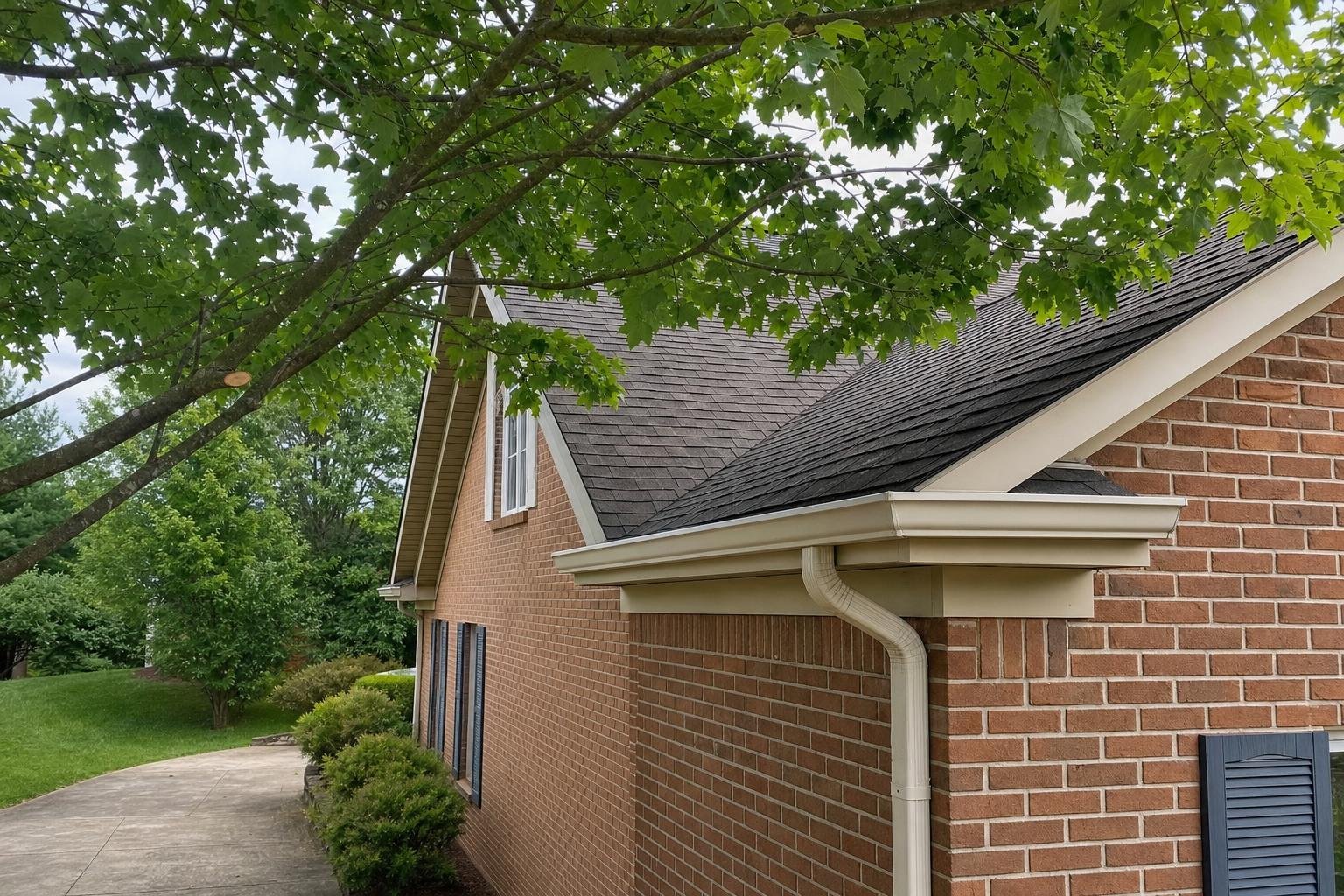
You need trimming when branches touch the roof or siding, when dead limbs hang over where people walk or park, or when the canopy has grown so heavy it's shading and loading the house. A visit from Homestead Tree of Johnson City settles whether it's trimming, something smaller, or nothing yet.
The signs are mostly things you can see from the ground. Limbs scraping shingles or gutters. Bare branches in July on a tree that's otherwise in full leaf. A single heavy limb reaching well past the trunk over a roof, a car or a play area. A canopy so dense that the grass underneath has thinned out.
Some things can wait. A few small twigs touching a fence or a bit of shade on the lawn isn't a reason to cut anything. If the problem is the tree itself (leaning, or dead through the trunk), trimming won't fix it, and the quote won't be for pruning.
A common next step is tree pruning. Need tree service in Johnson City for another job? Start on our home page.
Helpful next: The Tree Service Timeline: What Each Step Involves · Comparing Tree Service Quotes: What Is Worth Checking
What does trimming cost, and what moves the price?
Trimming a tree between 25 and 50 feet tall runs $275 to $1,600 in Johnson City. Homestead Tree of Johnson City gives a typical range for your tree on the first phone call. The firm number is set at the walk-around and written down before any cutting begins.
Jobs near the bottom of that range involve a few limbs, clear access and nothing close to the house. Near the top, a lot of wood has to come out, or the limbs hang over a roof and get lowered piece by piece instead of dropped. Height inside that 25 to 50 foot band matters too, because a taller tree means more reach from the aerial bucket truck or more work up in the tree.
Access is the quiet one. A tree in an open front yard is simpler than one behind a fence or down a bank. When we walk the tree we look at where the truck can sit and where the cut limbs will land, and both go into the number. We don't have a figure for trees outside the 25 to 50 foot range, so a very small or very large tree gets priced after we've seen it.
How is the job done, start to finish?
We look the tree over, quote it in writing, mark and clear a drop area, make the cuts with a chainsaw from the tree or an aerial bucket truck, and send tools up and down on a handline. Homestead Tree of Johnson City plans for branches under tension before the first cut.
The walk-around comes first because the cuts depend on what's under the tree. We mark the area where cut branches may fall and check that it's actually clear, meaning no cars, patio furniture or people. A limb that's bent or pinned by another branch can move when it's cut, so we work out which way it will go before the saw touches it.
Whether we work from the bucket or from the tree depends on where the limbs are and whether the truck can get close enough to reach them. When we're up in the tree, tools go up and come down on a handline attached to the end of the tool, never tossed and never carried in a free hand. It's slower than dropping a saw, and it's how nothing lands on your roof.
How long will it take?
Time on the job moves with the tree's size, how much wood comes off, and how close the truck or crew can get to the limbs. Wet or frozen ground in Johnson City can also push a job to a better day.
A few limbs off one tree in an open yard is a different afternoon than shaping a tall tree over a roof. Setting up the drop area and planning tension cuts takes time on any job, and we'd rather spend it there than rush the cutting.
If you have several trees, or trees along a property edge, say so when you call. We'd rather size the whole job at once than come back for the second tree.
Does a creek bank or wet ground change how you trim?
Yes. Near Cash Hollow, north of Johnson City, the Weaver soil on narrow creek bottomlands is mostly subject to overflow, so streamside trees can sit on flood-prone ground. Homestead Tree of Johnson City checks how firm the ground is before a bucket truck or a drop area goes anywhere near it.
Flood-prone bottomland can be soft after rain, which decides how close the truck gets and where we can safely work. Annual precipitation here varies, so the same yard can be firm one year and soft the next.
Season changes the work on any lot. Summers are warm and humid, which is hard on a crew working up in a canopy. Winters are short, wet and very cold, so you can get slick or frozen ground. We schedule around that when we can.
Want a number for your own tree?
Call Homestead Tree of Johnson City and tell us roughly how tall the tree is, what it's close to, and what's bothering you about it. Photos help if you have them. You'll hear a rough range on the call. Nothing is booked on that call; the written quote comes first.
If the tree doesn't need work yet, we'll say so. That's still a useful answer.
What Goes Into the Work
In detail, steps like these come up:
- Inspect the tree and work area for hazards, including cracked limbs and overhead power lines, before starting.
- Treat overhead power lines as live; arrange utility protection before working near them, and avoid contact unless the utility confirms they are de-energized.
Also Available
Questions Welcome
(423) 672-1913Call and tell us what you're dealing with, and it costs nothing to ask.
Get a Quote